
Between Hydrogen Sulfide
and Carbon Dioxide
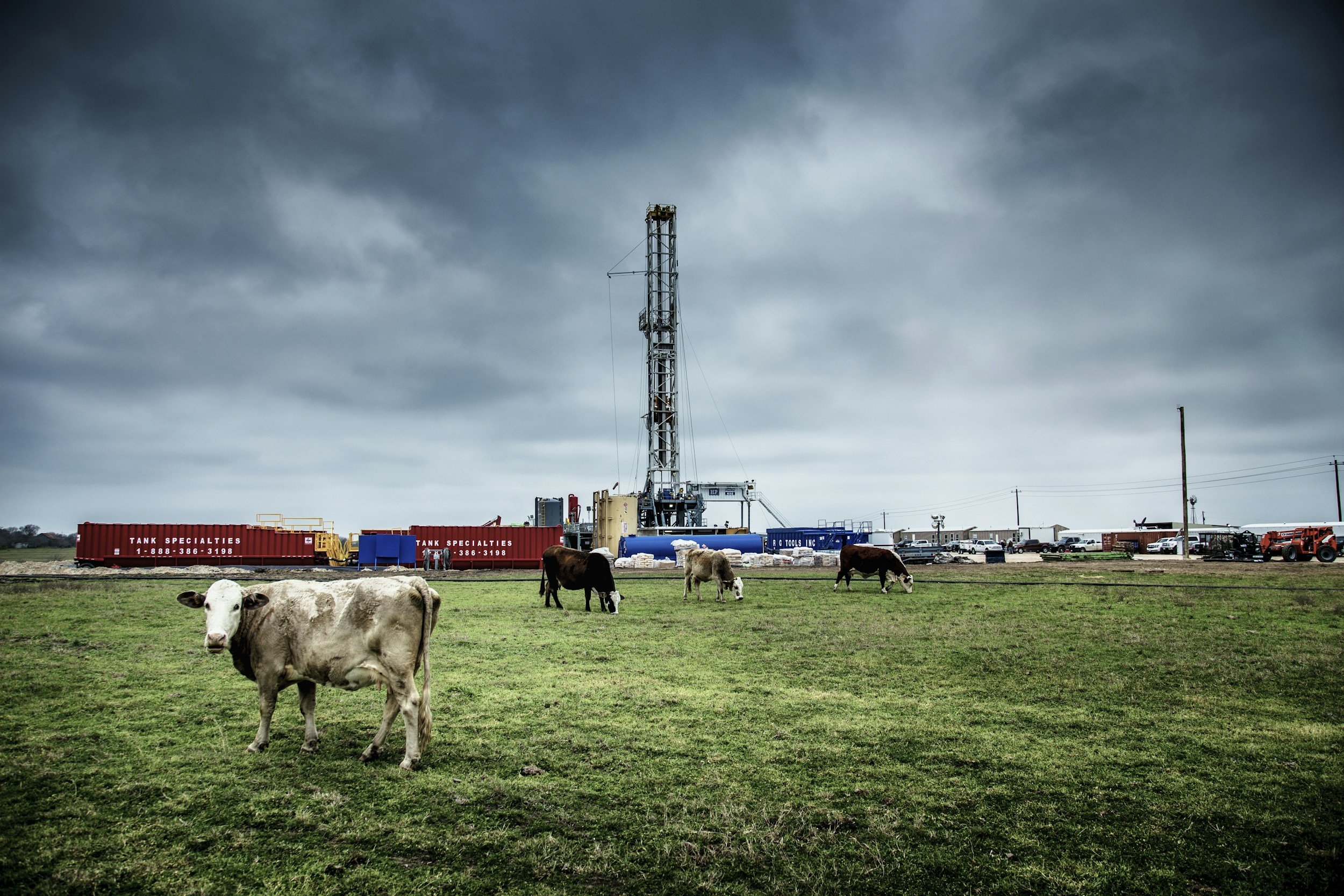
I was a child when a hydrogen sulfide leak from a West Texas well killed nine members of a family overnight.
I remember waking up for school and noticing my father wasn’t at breakfast. He was a petroleum engineer and had already gone out to the well site. The details of the incident stayed with me for decades, but so did something else: the speed with which the Railroad Commission moved afterward to regulate hydrogen sulfide exposure.
The science was irrefutable. Hydrogen sulfide is acutely toxic. People die quickly. Communities understand the danger instinctively because the consequences are immediate, visible, and horrifying. There was little ambiguity about the need for action.
I have been thinking about that memory recently while preparing remarks for a produced water conference.
Hydrogen sulfide and carbon dioxide sit at opposite ends of the public-risk spectrum.
Hydrogen sulfide is immediate, local, visceral, and lethal. Carbon dioxide is diffuse, cumulative, planetary, and politically contested. One kills in minutes. The other operates through decades-long atmospheric accumulation. One triggers instinctive public alarm. The other requires models, probabilities, and abstractions to explain.
Produced water exists somewhere in the middle.
That middle space may be one of the hardest governance challenges in modern infrastructure development.
The technical community often approaches produced water through chemistry, toxicology, treatment standards, economics, engineering feasibility, and risk management. Those questions matter enormously. But infrastructure controversies are rarely governed by technical merit alone. They are governed by saliency — by what communities perceive, fear, remember, and trust.
That distinction matters because we are entering an era in which infrastructure legitimacy is becoming as important as infrastructure capability.
Across the country, major projects are increasingly colliding with distrust. In New Mexico, activists recently defeated legislation that many industry and policy leaders viewed as a pragmatic pathway for beneficial reuse of treated produced water. In Texas, desalination projects face growing organized resistance shaped partly by broader anxieties about industrial water use and environmental accountability. Data centers are encountering similar backlash around water consumption, land use, power demand, and community identity.
These conflicts are often interpreted narrowly as political opposition or misinformation campaigns. Sometimes they are. But that explanation is incomplete.
Communities are asking a deeper question: who bears the risks, who captures the benefits, and who gets to decide?
That is not fundamentally a chemistry question. It is a governance question.
Industries often underestimate how quickly technical disputes can become proxy battles over trust. The shale revolution itself offers a cautionary example. Much of the anti-fracking movement was not driven solely by geology or engineering disagreements. It was driven by perceptions that communities were excluded from decisions affecting their land, water, traffic, housing, public services, and long-term economic future.
Once distrust hardens, technical facts alone rarely resolve it.
The lesson from hydrogen sulfide is not that all risks are equivalent. They are not. The lesson is that public legitimacy depends on whether institutions demonstrate responsiveness proportional to public concern.
When risks are salient and visible, institutions tend to move quickly because the social mandate for action is obvious. The challenge becomes harder in the middle ground — where risks are uncertain, impacts uneven, scientific understanding evolving, and public confidence fragile.
Produced water now occupies much of that terrain.
That does not mean beneficial reuse should be abandoned. It does mean the industry may need to think beyond engineering performance alone. Monitoring transparency, third-party validation, long-term liability frameworks, public participation, adaptive governance, and sustained community engagement may ultimately matter as much as treatment technology itself.
The future of large-scale infrastructure development — whether in energy, water, carbon management, or AI data centers — will increasingly depend on this broader social architecture.
Technical excellence remains necessary.
But it is no longer sufficient.